LG 32GX870B-B: 32-inch Tandem WOLED, 4K, and Dual Mode
What changes from the 32GX870A-B, how much brightness LG advertises, and what you gain by moving from 4K at 240 Hz to Full HD at 480 Hz.
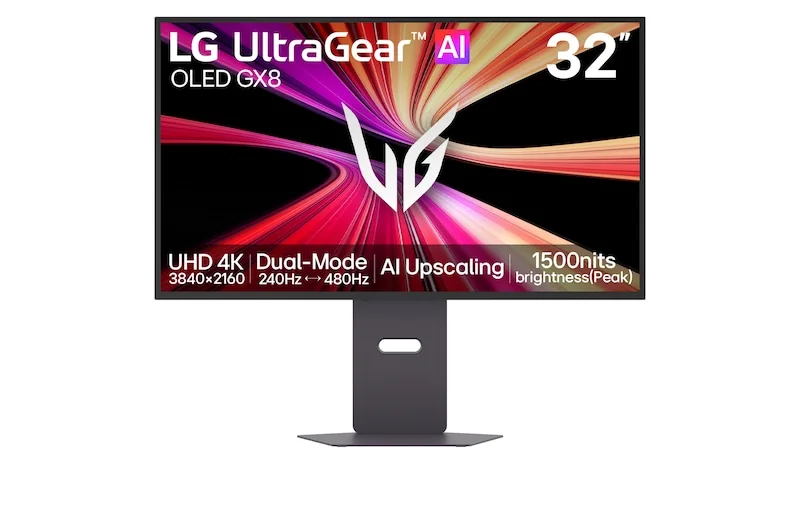
The LG 32GX870B-B keeps a familiar combination: 4K for detail and Full HD for refresh rate. The new elements are its Tandem OLED panel and advertised brightness headroom. Comparing it with the 32GX870A-B helps separate what changes from what the previous model already offered.
A different letter, a different panel
The important letter is the one just before the hyphen. The A-B uses WOLED with MLA+; the B-B moves to fourth-generation Tandem OLED. Both retain an actual 31.5-inch size and the same two resolution and refresh-rate modes.
32GX870A-B
WOLED with MLA+
True Black 40032GX870B-B
Fourth-generation Tandem OLED
True Black 500Both: 31.5″ · 4K at 240 Hz · Full HD at 480 Hz
Advertised brightness for each model
275 → 335 nits: around 60 nits more in the specified typical brightness.
1300 → 1500 nits: the advertised increase refers to a small pattern at 1.5% APL.
Comparison conditions and sources
Values from the specifications for LG 32GX870A-B and LG 32GX870B-B. Both HDR peaks are advertised at 1.5% APL. Typical brightness is not an in-house measurement at 100% APL. These figures do not establish how much brightness the monitors sustain in a bright scene.
The move from True Black 400 to 500 is another specification difference. It does not mean monitor brightness is always 400 or 500 nits: certification and HDR peak are different figures. The comparison above shows typical brightness and peak separately.
Dual Mode: choose your priority
480 Hz requires dropping to Full HD. The selector represents two configurations of the same screen: detail level and refresh interval change, not the monitor’s physical size.
More detail
3840 × 2160 pixels for desktop work and games where sharpness comes first.
- Pixels per image
- 8.29 million
- Time between refreshes
- 4.17 ms
Higher refresh rate
1920 × 1080 pixels to prioritise 480 Hz, if the game and GPU can take advantage of it.
- Pixels per image
- 2.07 million
- Time between refreshes
- 2.08 ms
The same screen, two modes. The grid is illustrative; the refresh interval is neither input lag nor GtG response time.
4K has four times as many pixels per image as Full HD. The 480 Hz mode doubles the number of refreshes, but that is only fully useful if the game and system deliver enough frames. Lower resolution on a 32-inch screen also makes detail loss more visible, especially in text and desktop use.
What still needs checking in games
The advertised 1500 nits correspond to an HDR pattern at 1.5% APL. Testing still needs to establish brightness as the illuminated area grows and over time, ABL management, and EOTF tracking. Color brightness, reflections, and actual performance in both modes also need measuring.
Specifications include DisplayPort 2.1 UHBR20, HDMI 2.1, and USB-C with up to 90 W, plus AI processing and scaling features. Those features deserve testing with real content; they should not be confused with an improvement in the panel’s native resolution. View the new model on LG’s website.
How does it compare with the previous model?
On paper, the B-B is the revision to consider if you want the new panel. The A-B still shares its resolution, size, and Dual Mode, so a large price difference may change the decision. Until comparable measurements are available, treat the brightness increase as an advertised improvement, without assuming all HDR behavior improves by the same proportion.
Regional availability and pricing in Spain must be checked separately. Before buying, verify the full model number at the retailer: a listing grouping variants may mix photos or features from both.
Sources and image
Specifications and photo of the LG 32GX870B-B; features and peak-brightness conditions for the LG 32GX870A-B; architecture of LG Display Tandem WOLED. Brightness figures are official. Refresh intervals and pixel counts are calculated from refresh rate and resolution; they are not latency tests. The product image is an LG promotional photo.